For more than two decades, the Challenge of the Americas has been a highlight of Wellington’s winter season, bringing the dressage community together for an evening of performance and purpose in support of breast cancer research. What began in 2002 as a small exhibition and luncheon grew into an under-the-lights gala centered around the event’s signature Grand Prix Musical Quadrille Team Challenge. In 2026, the tradition carried added significance as the Challenge of the Americas marked its final year in Wellington, Florida.
BioStar US founder Tigger Montague has been a loyal supporter and contributor to the event for nine years, bringing her creative vision to the quadrille performances. Through her work, Montague helped set the tone for many of the evening’s performances — blending musicality, storytelling, and horsemanship into routines that resonated beyond the arena.
Looking back across the years, certain themes remain especially meaningful.
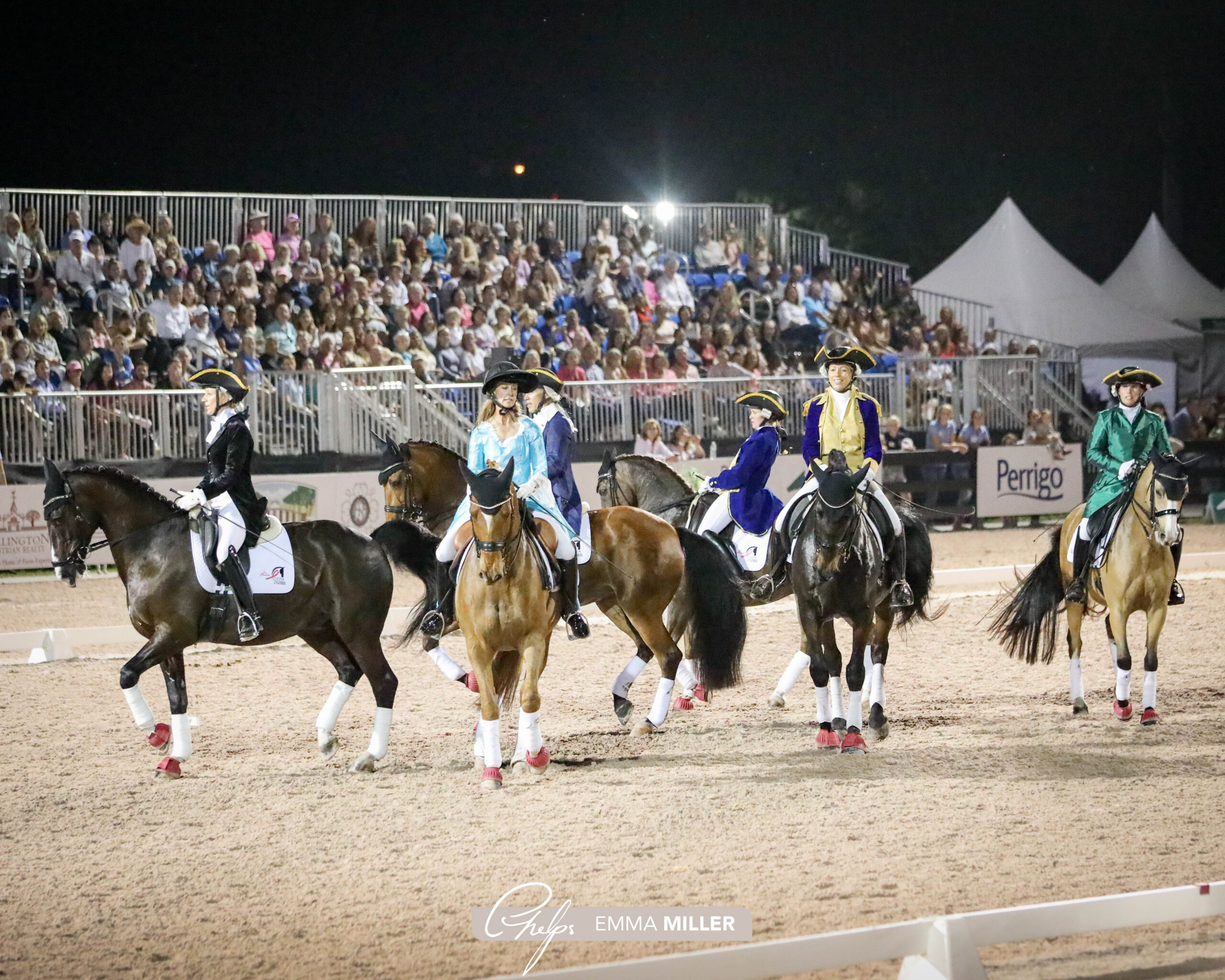
“My top favorites are Hamilton and Time,” Montague said, noting that the Hamilton quadrille stands out most. “It really encompassed my theatre aesthetic and storytelling.”
That theatrical influence long informed Montague’s approach to COTA — viewing the quadrille not simply as synchronized riding, but as narrative expression set to music.
For the final Wellington edition, Montague channeled that same creative energy into an ambitious closing contribution.
“I planned four different exhibitions this year,” she said. “I love creating. I am never short on ideas. COTA has always been a place for me to let loose my creativity and try new things.”

Among those projects was a 10-horse quadrille, a production that highlighted both the logistical complexity and collaborative spirit behind the performances.
“The first challenge is that there are 10 horses in the arena at one time — you don’t want to make it look like bumper cars,” Montague said. “I had to play around with the choreographic ideas because at the end of the day it is about executing the pattern well, not the degree of difficulty.”
What ultimately elevates the performance, she added, is not the choreography alone but the participants bringing it to life.
“The magic is in the riders and horses. The riders are a pretty gutsy group, which makes it fun.”
While audiences experienced polished exhibitions under the lights, the creative process began months earlier and unfolded largely out of view.
“Frustration, worry, stress, and the time commitment,” Montague said when asked what spectators might not see. “I started working on quadrille ideas back in April 2025 — playing with music, imagining patterns, thinking about how those patterns fit the music.”
Through the summer and fall, that process evolved into refining selections, editing soundtracks, and shaping concepts into executable performances — an extended creative arc culminating in a single evening.
Yet the artistic process exists alongside the event’s deeper mission.
“You mean the swear words behind the scenes?” Montague joked, before turning to the heart of the matter. “COTA is all about breast cancer research funding. My job, like the other choreographers, is to bring light and uplifting vibrations to the audience during performance — to bring everyone together for a common cause.”
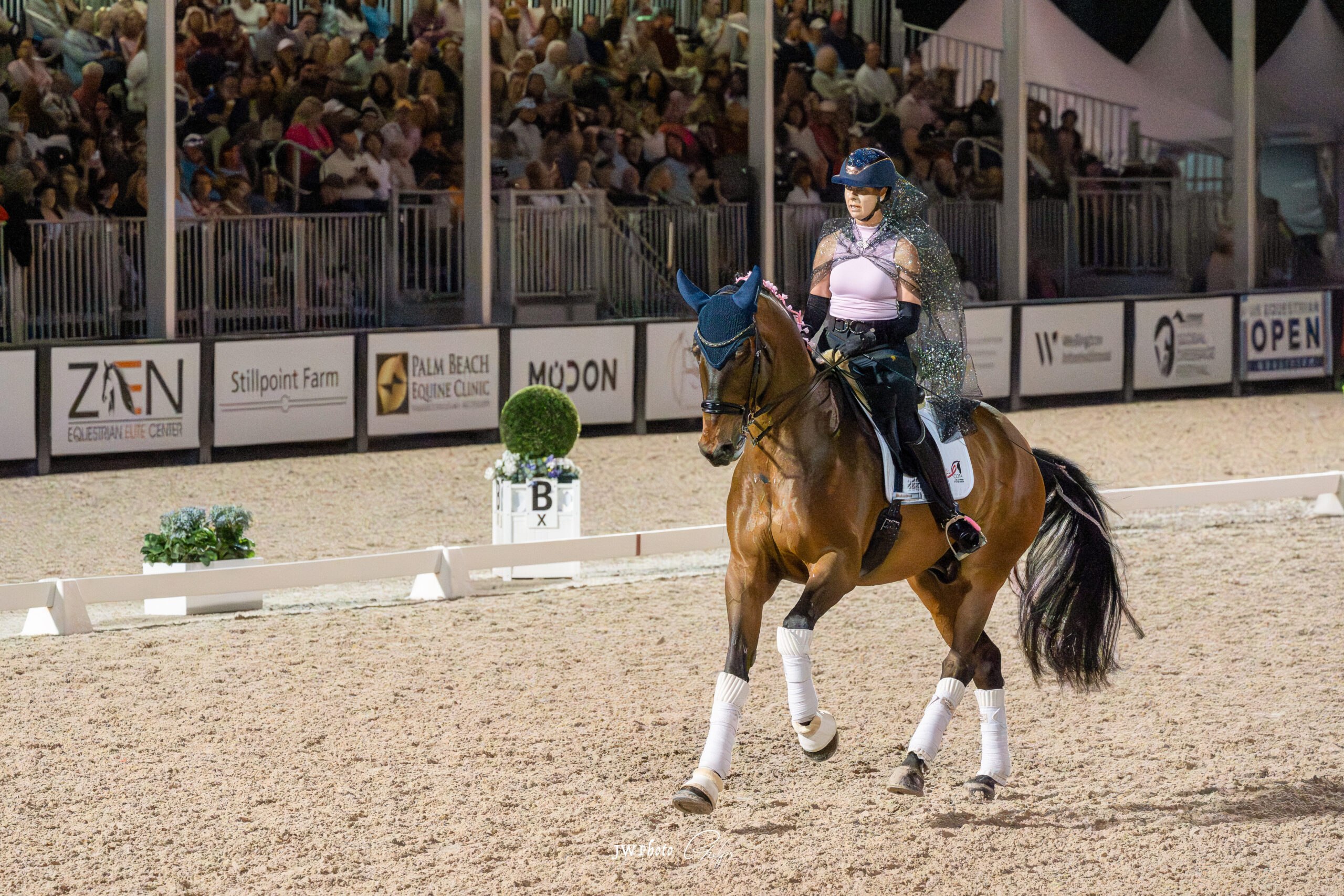
Asked to capture her years with Challenge of the Americas in a single musical selection, Montague chose Break on Through to the Other Side by The Doors — a fitting reflection of movement, change, and creative exploration.
Her feelings about this final Wellington edition were equally succinct.
“Joy and sadness,” she said.
Whether the event may one day return to Wellington remains uncertain, but its influence — particularly in expanding perceptions of what dressage can be — is undeniable.
If given the opportunity to write a letter to Challenge of the Americas, Montague said her message would center on gratitude.
“Thank you for bringing the dressage community together for a common cause,” she said. “Thank you for the freedom of artistic expression, for bringing quadrilles into the light.”
That visibility, she noted, helped reinforce a broader truth about the sport.
“Dressage is not just an individual’s ride. Dressage can be art, it can be entertainment — it can be so many things.”
As the final Wellington Challenge of the Americas now passes into memory, Montague’s reflections capture both the creative spirit and communal impact that defined the event — a closing act shaped not only by performance, but by the legacy it leaves behind.
Reflecting on the final year of COTA, Montague summed up the moment with a line from The Rolling Stones:
“You can’t always get what you want, but if you try sometimes, well, you just might find, you get what you need.”